Showing posts with label Artificial Sweeteners. Show all posts

Saturday, January 12, 2013


Waking Times
Sugar and artificial sweeteners are so accessible, affordable and socially sanctioned, that few consider their habitual consumption to be a problem on the scale of say, addiction to cocaine.  But if recent research is correct their addictive potential could be even worse.

Almost 40 years ago, William Duffy published a book called Sugar Blues which argued that refined sugar is an addictive drug and profoundly damaging to health.  While over 1.6 million copies have been printed since its release in 1975, a common criticism of the book has been that it lacked sufficient scientific support.

Today, William Duffy’s work is finding increasing support in the first-hand, peer-reviewed and published scientific literature itself. Not only is sugar drug-like in effect, but it may be more addictive than cocaine.  Worse, many sugar-free synthetic sweeteners carry with them addictive properties and toxicities that are equal to, or may outweigh those of sugar.
Back in 2007, a revealing study titled, “Intense sweetness surpasses cocaine reward,”  found that when rats were given the option of choosing between water sweetened with saccharin and intravenous cocaine, the large majority of animals (94%) preferred the sweet taste of saccharin.[i]

This preference for sweetness was not attributable to its unnatural ability to induce sweetness without calories, because the same preference was found with sucrose; nor was the preference for saccharin overcome by increasing doses of cocaine.

A common argument against the relevance of animal studies like this to human behavior is that rats differ too profoundly from humans. However, even insects like forager bees have been found to respond in a similar way to humans when given cocaine, experiencing an overestimation of the value of the floral resources they collected, with cessation of chronic cocaine treatment causing a withdrawal-like response.[ii]

Researchers believe that intense sweetness activates ancient neuroendocrine pathways within the human body, making obsessive consumption and/or craving inevitable. The authors of the cocaine/saccharin study summarized this connection as follows:
Our findings clearly demonstrate that intense sweetness can surpass cocaine reward, even in drug-sensitized and -addicted individuals. We speculate that the addictive potential of intense sweetness results from an inborn hypersensitivity to sweet tastants. In most mammals, including rats and humans, sweet receptors evolved in ancestral environments poor in sugars and are thus not adapted to high concentrations of sweet tastants.

The supranormal stimulation of these receptors by sugar-rich diets, such as those now widely available in modern societies, would generate a supranormal reward signal in the brain, with the potential to override self-control mechanisms and thus to lead to addiction.
In a previous article, “Is Fructose As Addictive As Alcohol?”, we looked at the addictive properties of isolated fructose in greater depth, including over 70 adverse health effects associated with fructose consumption.

 It appears that not only does fructose activate a dopamine- and opioid-mediated hedonic pathway within the body, but like excessive alcohol consumption, exacts a significant toll on health in exchange for the pleasure it generates.

The drug-like properties of common beverages and foods, have been the subject of a good deal of research over the past few decades. Wheat and related grains, for instance, are a major foodsource of opioid peptides. These pharmacologically active compounds, also found in milk,coffee and even lettuce, may even explain why ancient hunters and gatherers took the agrarian leap over 10,000 years ago.

  Likely, the transition from the Paleolithic to Neolithic was motivated by a combination of environmental pressures and the inherently addictive properties made accessible and abundant due to the agrarian/animal husbandry mode of civilization. For more on this, read our essay “The Dark Side of Wheat.”

As far as synthetic sweeteners, an accumulating body of toxicological research indicates they have a wide range of unintended, adverse health effects beyond the aforementioned problem of addiction. For a comprehensive list, view our Artificial Sweetener Research page.

One clear implication of these findings is that one is best served consuming natural sweet foods, including honey, or fruit like apples. Not only are these easier to consume in moderation, but they have a profound set of “side benefits” as well.

Wednesday, September 5, 2012

New Pepsi Sweetener Combination Of Toxins


PepsiCo has decided that aspartame, a neuro-toxin used in their diet cola products as a sweetener, is not “sweet enough” and are “testing a new mix of artificial sweeteners” that will retain its potency longer than high fructose corn syrup.

The new mixture of sweeteners being tested includes acesulfame-potassium, or ace-K. The problem PepsiCo has with aspartame is that it is affected negatively in warm conditions that occur during shipping before their soda products arrive in retail stores.

In 1998, the Food and Drug Administration (FDA) approved the use of ace-K despite its known safety dangers. This chemical is most popularly used in baked goods, chewing gum and gelatin desserts according to the food safety advocacy group, the Center for Science in the Public Interest.

Ace-K, or acesulfame potassium, is a lab-created chemical that is 200 times sweeter than sucrose. Ace-K is suspected through research to have carcinogenic properties, yet this studied fact was dismissed and further studies were not conducted prior to the FDA approval.

In testing preformed on rats, ace-K was shown to stimulate dose-dependent insulin secretion. In further studies, ace-K provided more of a danger to male rats, than female rats with regard to their signal toward being cancer producing.

The chemical has a very strong after taste. To combat this phenomenon, Kraft Foods began using sodium ferulate to mask its bitterness.

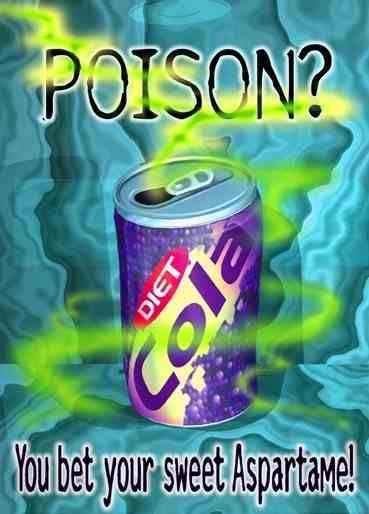
Aspartame has been proven to be highly addictive because it causes actual cravings for the toxin. Many find that they cannot stop using the product because of the severe withdrawal symptoms.

Aspartic acid, also known as aspartate, acts as a neurotransmitter in your brain. It facilitates the transmission of information from neuron to neuron. Excessive amounts of aspartate in your brain kills neurons by permitting the invasion of massive amounts of calcium into the cells. This influx generates extreme levels of free radicals that kill the cells. The neural cell damage is caused by unwarranted use of aspartate. This is why they are denoted as “excitotoxins.” They “excite” or arouse the neural cells to death.

Back in March, rather than change labels to admit to poisoning their customers, PepsiCo altered their recipe by removing 4-methylimidazole (4-MI or 4-MEI), a known carcinogen, from their formula in soft drink products.

In 2011, mainstream media reported that certain brands of PepsiCo soft drinks contained a patented flame retardant used in plastics to keep carbonated drinks from becoming combustible. Over exposure to the toxin could lead to the necessity of medical attention for “skin lesions, memory loss and nerve disorders.”

A report from the Institute for Agriculture and Trade Policy stated that processed foods and beverages may contain mercury that was part of the process of deriving high fructose corn syrup. The FDA failed to make this independent study effective by acknowledging its findings.

Mercury impairs neurological development, as well as has a dramatic effect on the human nervous system. In children, mercury exposure manifests as autism and attention deficit hyperactivity disorder (ADHD).

Shockingly, PepsiCo have never denied their use of the deadly additive aspartame, nor its link to cancer. They stated publicly that the findings from scientific studies were untrue; essentially ignoring the fault and responsibility of their company to offer a product that did not endanger the health of the public. By denying the facts, their validity does not diminish.

Tuesday, February 28, 2012

Splenda Pushing New Toxins

Desperate to maintain its false brand image of being a healthy sugar alternative, the Splenda company, maker of toxic sucralose, has unveiled a new product line called "Splenda essentials" that incorporates trace amounts of B vitamins, antioxidants, and fiber as bait to convince the health-conscious community that Splenda is good for them. But do not be fooled. These products are still filled with the same toxic chlorocarbon sucralose as normal Splenda, which is linked to some very severe health problems.

Marketed as being "made from sugar, so it tastes like sugar," Splenda's main ingredient, sucralose, is basically a chlorinated sugar that the company claims is harmless because it passes right through the body unabsorbed. Utilizing the same process used to create some pesticides, however, including the now-banned pesticide DDT, sucralose is anything but an inert sweetener. Numerous scientific studies have found that sucralose is absorbed by the body when consumed, and one particular study in Japan found that up to 40 percent of it is absorbed

Why is this such a big deal? As reported by the Alliance for Natural Health USA (ANH-USA), the absorption of chlorinated compounds can cause severe damage to the nervous system, immune system, bodily organs, microflora balance in the intestines, and glandular systems. Dr. James Bowen, M.D., a physician and biochemist, likens chlorine compounds to "nature's Doberman attack dog -- a highly excitable, ferocious atomic element employed as a biocide in bleach, disinfectants, insecticide, WWI poison gas and hydrochloric acid."

Friday, February 10, 2012

Move Over Aspartame, Neotame May Be Deadlier

Neotame, New Neurotoxic Sweetener: FDA Says No Label Needed, Not Even in Organics
A Monsanto-created chemical, Neotame is likely more toxic than Aspartame. The FDA has quietly decided that we don't have the right to know if it's adulterating our food, not even if the food is labeled USDA Organic.

Aspartame can step aside. There's a new sweetener in town and it isn't saddled with the inconvenience of having to be listed on labels, so it can be sneaked into any prepared food, even USDA so-called Organic. So sayeth the FDA. Neotame is a Monsanto-created chemical similar to Aspartame, including its neurotoxic properties.

Monsanto developed Neotame as their Aspartame patent was expiring, and had no trouble in gaining FDA approval in 2002. They added 3-dimethylbutyl, a chemical listed as hazardous by the Environmental Protection Agency (EPA), to Aspartame, making it both sweeter and more toxic.
Toxicity

Both Aspartame and Neotame contain substances that are metabolized into formaldehyde, a highly toxic poison, and an excitotoxic amino acid that agitates, thereby damaging, nerves.

At the time Neotame was originally approved by the FDA, Feingold.org, which battles the addition of many dodgy food additives, stated:

We did a search of MedLine to find studies of adverse effects or side effects of Neotame. Only four studies appeared, two of which were not studies, and the other two of which were actually a single study done by NutraSweet company researchers.

Feingold aptly described one of the nonstudies as effectively saying, "If we don't look, we won't know anything bad." The other, by the World Health Organization, is not a look at potential toxicity, but rather is about setting acceptable daily intakes of Neotame, along with other artificial sweeteners. Note: One must wonder how the FDA justifies non-listing of an ingredient for which there's an acceptable daily intake.

Mary Nash Stoddard, founder of the Aspartame Consumer Safety Network, compared the historic arc of tobacco company research with that of Aspartame. It applies equally well to Neotame:

There is a parallel issue with which to compare the Aspartame issue. That of cigarettes and the deadly effects of smoking. The massive Tobacco Industry is able to produce large volumes of scientific studies showing smoking does not cause: lung cancer, heart disease, strokes or death. Today, mainstream science accepts the fact that smoking can be deadly and addictive. So it is with Aspartame, whose approval was based, not on scientific fact, but as an issue of public policy.


Neotame Labeling

From the beginning, Neotane labeling has been limited. It's in the background noise of products produced by Agribusiness.

Up to this time, Neotame hasn't been sold to the public, but that hasn't been necessary. It's been used widely in prepared foods. So, the less awareness the public has, the less likely it is that people will try to avoid it. For the most part, the technique has worked. Now, very quietly, the FDA has decided that the public shouldn't be informed when Neotame is included in any product. Even Organic products, which are supposed to be unadultered with chemicals, are not required to state when Neotame is inside.

India will soon serve as guinea pigs for Neotame. It will soon be launched there as a tabletop sweetener, like Equal and Splendor, by NutraSweet, which owns and sells the product.

Neotame is now being marketed as Sweetos for use in cattle feed. Molasses has been utlized to get cows to eat foods made unpalatable by chemical additives. Neotame is both less costly than molasses and subject to fewer regulations. How do you like that? A natural food is more stringently regulated than a known-poisonous chemical that's put into food.

The reach of Neotame is likely to be extensive. They're planning to replace other artificial sweeteners with it. A major seller of artificial sweeteners, which goes by the misleading name of Ensigns Health Care Pvt Ltd, intends to use it in place of sucralose.

In the EU, Neotame has been approved by the European Food Safety Agency (EFSA). As is so common in the EU, the product is hidden behind an E-number. So, labels don't have to say that products contain Neotame. They only need to list "E 961". Naturally, with hundreds of E-numbers, how many people can be aware of which ones are truly dangerous?

It looks like the FDA's loosening of labeling rules for Neotame is part of a large-scale effort to make it a near-ubiquitous artificial sweetener, to be found on the tabletop, in all prepared foods—even organics—and even in the meats consumed.

The solution is fairly simple, but not necessarily easy. If you want to avoid foods adulterated with Neotame, among other dangerous additives and overprocessing, then you need to grow your own foods and prepare them yourselves, or purchase only from suppliers whose processing and sourcing is known to you, which generally means locally-produced.

Wednesday, March 16, 2011

Splenda & DDT

Splenda, the Artificial Sweetener that Chemically Resembles DDT

Splenda is the brand name for the chemical compound called sucralose that is 600 times sweeter than sugar, and is the subject of many previous articles on my site, so if you’re just reading about Splenda for the first time, you might want to start here, and also this article for a primer on this dangerous additive that the FDA has allowed into your food supply.

It’s worth noting that Splenda is actually 99 percent sugar (dextrose and maltodextrin, which are derivatives of high-fructose corn syrup), with 1 percent sucralose added. This is how strong a sweetener sucralose actually is.

Economically using Splenda makes no sense, since it only saves you a handful of calories, and that isn’t even taking into consideration the health implications of using this toxic chemical!

Both sucralose and DDT are organochlorines, meaning they are in a class of man-made chemicals that have a chlorine molecule bonded to their chemical structure through synthetic processing (organochlorines are not found in nature).

Some other examples of organochlorines are a host of pesticides that have been banned worldwide because they disrupt both animal and human health, including being linked to the following: