Showing posts with label Soda. Show all posts

Wednesday, September 5, 2012

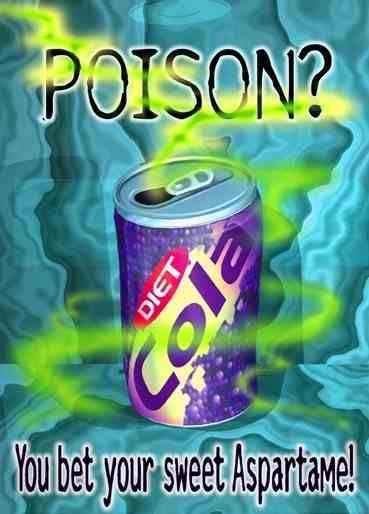
New Pepsi Sweetener Combination Of Toxins


PepsiCo has decided that aspartame, a neuro-toxin used in their diet cola products as a sweetener, is not “sweet enough” and are “testing a new mix of artificial sweeteners” that will retain its potency longer than high fructose corn syrup.

The new mixture of sweeteners being tested includes acesulfame-potassium, or ace-K. The problem PepsiCo has with aspartame is that it is affected negatively in warm conditions that occur during shipping before their soda products arrive in retail stores.

In 1998, the Food and Drug Administration (FDA) approved the use of ace-K despite its known safety dangers. This chemical is most popularly used in baked goods, chewing gum and gelatin desserts according to the food safety advocacy group, the Center for Science in the Public Interest.

Ace-K, or acesulfame potassium, is a lab-created chemical that is 200 times sweeter than sucrose. Ace-K is suspected through research to have carcinogenic properties, yet this studied fact was dismissed and further studies were not conducted prior to the FDA approval.

In testing preformed on rats, ace-K was shown to stimulate dose-dependent insulin secretion. In further studies, ace-K provided more of a danger to male rats, than female rats with regard to their signal toward being cancer producing.

The chemical has a very strong after taste. To combat this phenomenon, Kraft Foods began using sodium ferulate to mask its bitterness.

Aspartame has been proven to be highly addictive because it causes actual cravings for the toxin. Many find that they cannot stop using the product because of the severe withdrawal symptoms.

Aspartic acid, also known as aspartate, acts as a neurotransmitter in your brain. It facilitates the transmission of information from neuron to neuron. Excessive amounts of aspartate in your brain kills neurons by permitting the invasion of massive amounts of calcium into the cells. This influx generates extreme levels of free radicals that kill the cells. The neural cell damage is caused by unwarranted use of aspartate. This is why they are denoted as “excitotoxins.” They “excite” or arouse the neural cells to death.

Back in March, rather than change labels to admit to poisoning their customers, PepsiCo altered their recipe by removing 4-methylimidazole (4-MI or 4-MEI), a known carcinogen, from their formula in soft drink products.

In 2011, mainstream media reported that certain brands of PepsiCo soft drinks contained a patented flame retardant used in plastics to keep carbonated drinks from becoming combustible. Over exposure to the toxin could lead to the necessity of medical attention for “skin lesions, memory loss and nerve disorders.”

A report from the Institute for Agriculture and Trade Policy stated that processed foods and beverages may contain mercury that was part of the process of deriving high fructose corn syrup. The FDA failed to make this independent study effective by acknowledging its findings.

Mercury impairs neurological development, as well as has a dramatic effect on the human nervous system. In children, mercury exposure manifests as autism and attention deficit hyperactivity disorder (ADHD).

Shockingly, PepsiCo have never denied their use of the deadly additive aspartame, nor its link to cancer. They stated publicly that the findings from scientific studies were untrue; essentially ignoring the fault and responsibility of their company to offer a product that did not endanger the health of the public. By denying the facts, their validity does not diminish.

Wednesday, August 1, 2012

Why Fizzy Soft Drinks Do Hard Damage To Your Body

Biological scientist Dr Hans-Peter Kubis, who's just led a study into what soft drinks do to our bodies, has reached some shocking conclusions. When you read what he discovered, you may well choose never to touch the fizzy stuff again.
Fizzy drinks appear to increase the risk of heart disease, liver failure and hypertension
Once upon a time, fizzy drinks were an occasional luxury treat.
Now, many of us think nothing of having at least one every day — maybe a lunchtime can of cola or a ‘natural’ lemonade from Pret.

We use them as instant pick-me-ups, and even as ‘healthy’ sports aids bought from vending machines at the gym. 


No trip to the cinema is complete without a supersize soft drink, either.
It’s no surprise to learn, then, that our consumption of soft drinks has more than doubled since 1985 — from ten gallons per person a year to more than 25 gallons.

We know this is not entirely good for us — but could sugary soft drinks be so dangerous that they should carry health warnings?

This may sound alarmist, but new medical studies have produced worrying results.

Even moderate consumption — a can a day, or just two a week — may alter our metabolism so that we pile on weight.

The drinks also appear to increase the risk of heart disease, liver failure and hypertension. 


In children, soft drinks have been linked to addict-like cravings, as well as twisting kids’ appetites so they hunger for junk food.

Already, countries such as Denmark and France are introducing soft-drink taxes to cut consumption. 


In the U.S., around 100 medical and consumer organisations are now calling on the Surgeon-General to investigate the health effects of soda and other sugary drinks.

Should we in Britain follow suit?
Sugary soft drinks come in numerous guises — from ‘innocuous’ fizzy elderflower to ‘health’ drinks such as Lucozade and ‘sports’ beverages like Gatorade.

Tuesday, June 12, 2012

Why Your Food Is Making You FAT

obesityus23

Up a rickety staircase at the Newarke Houses Museum in Leicester, England hangs a portrait of Britain’s first obese man, painted in 1806. Daniel Lambert weighed 53st (335kg) and was considered a medical oddity.
Too heavy to work, Lambert came up with an ingenious idea: he would charge people a shilling to see him. Lambert made a fortune, and his portrait shows him at the end of his life: affluent and respected – a celebrated son of Leicester.

Two hundred years on, I’m in a bariatric ambulance (an alternative term for obese, favoured by the medical world because it’s less shaming to patients) investigating why the UK is in the midst of an obesity crisis.
The crew pick up a dozen Daniel Lamberts every week.

Fifty-three stone is nothing special, it’s at the lower end of the weight spectrum, with only the 80st patients worthy of mention when a shift finishes. The specially designed ambulance carries an array of bariatric gizmos including a “spatula” to help with people who have fallen out of bed or, on a recent occasion, an obese man jammed between the two walls in his hallway. As well as the ambulance, there’s a convoy of support vehicles including a winch to lift patients onto a reinforced stretcher. In extreme cases, the cost of removing a patient to hospital can be up to £100,000, as seen in the recent case of 63st teenager Georgia Davis.

But these people are not where the heartland of the obesity crisis lies. On average, in the UK, we are all – every man, woman and child – three stone heavier than we were in the mid-60s. We haven’t noticed it happening, but this glacial shift has been mapped by bigger car seats, swimming cubicles, XL trousers dropped to L (L dropped to M). An elasticated nation with an ever-expanding sense of normality.

Why are we so fat? We have not become greedier as a race. We are not, contrary to popular wisdom, less active – a 12-year study, which began in 2000 at Plymouth hospital, measured children’s physical activity and found it the same as 50 years ago. But something has changed: and that something is very simple. It’s the food we eat. More specifically, the sheer amount of sugar in that food, sugar we’re often unaware of.

The story begins in 1971.

Richard Nixon was facing re-election. The Vietnam war was threatening his popularity at home, but just as big an issue with voters was the soaring cost of food. If Nixon was to survive, he needed food prices to go down, and that required getting a very powerful lobby on board – the farmers. Nixon appointed Earl Butz, an academic from the farming heartland of Indiana, to broker a compromise. Butz, an agriculture expert, had a radical plan that would transform the food we eat, and in doing so, the shape of the human race.

Butz pushed farmers into a new, industrial scale of production, and into farming one crop in particular: corn. US cattle were fattened by the immense increases in corn production. Burgers became bigger. Fries, fried in corn oil, became fattier.

Corn became the engine for the massive surge in the quantities of cheaper food being supplied to American supermarkets: everything from cereals, to biscuits and flour found new uses for corn. As a result of Butz’s free-market reforms, American farmers, almost overnight, went from parochial small-holders to multimillionaire businessmen with a global market. One Indiana farmer believes that America could have won the cold war by simply starving the Russians of corn. But instead they chose to make money.

By the mid-70s, there was a surplus of corn. Butz flew to Japan to look into a scientific innovation that would change everything: the mass development of high fructose corn syrup (HFCS), or glucose-fructose syrup as it’s often referred to in the UK, a highly sweet, gloppy syrup, produced from surplus corn, that was also incredibly cheap.

HFCS had been discovered in the 50s, but it was only in the 70s that a process had been found to harness it for mass production. HFCS was soon pumped into every conceivable food: pizzas, coleslaw, meat. It provided that “just baked” sheen on bread and cakes, made everything sweeter, and extended shelf life from days to years.

A silent revolution of the amount of sugar that was going into our bodies was taking place. In Britain, the food on our plates became pure science – each processed milligram tweaked and sweetened for maximum palatability. And the general public were clueless that these changes were taking place.

There was one product in particular that it had a dramatic effect on – soft drinks. Hank Cardello, the former head of marketing at Coca-Cola, tells me that in 1984, Coke in the US swapped from sugar to HFCS (In the UK, it continued to use sugar). As a market leader, Coke’s decision sent a message of endorsement to the rest of the industry, which quickly followed suit.

There was “no downside” to HFCS, Cardello says. It was two-thirds the price of sugar, and even the risk of messing with the taste was a risk worth taking when you looked at the margin, especially as there were no apparent health risks. At that time, “obesity wasn’t even on the radar” says Cardello

Tuesday, January 31, 2012

3 Surprising Reasons To Give Up All Sodas

America has a drinking problem. No, not booze. I'm talking about soft drinks. According to the Beverage Marketing Corporation, the average American guzzles 44.7 gallons of the sweet stuff every year. Not sure what 44.7 gallons looks like? It's about what you'd need to fill a small kiddie pool.

But the truth is, you don't need me to tell you that soda isn't healthy. We all know that America’s drink of choice contributes to our country's ever-expanding obesity problem. But, as Rodale.com writer Leah Zerbe discovered, love handles are just the beginning. Read on for her report on three shocking soda facts that will have you saying “Just water, please” from now on.

Shocking Soda Fact #1: Soda fattens up your organs

A recent Danish study revealed that drinking non-diet soda leads to dramatic increases in dangerous hard-to-detect fats. Researchers asked participants to drink either regular soda, milk containing the same amount of calories as regular soda, diet cola, or water every day for six months. The results? Total fat mass remained the same across all beverage-consuming groups, but regular-soda drinkers experienced dramatic increases in harmful hidden fats, including liver fat and skeletal fat. The regular-soda group also experienced an 11 percent increase in cholesterol compared to the other groups! And don’t think switching to diet varieties will save you from harm: Artificial sweeteners and food dyes have been linked to brain cell damage and hyperactivity, and research has shown that people who drink diet soda have a higher risk of developing diabetes.

Read out about the 7 biggest food label lies.

FIX IT WITH FOOD: The average American drinks 450 calories a day. By switching to water as your go-to beverage, you'll make room in your diet for these 40 Foods with Superpowers—foods that, even in moderation, can strengthen your heart, fortify your bones, and boost your metabolism so you can lose weight more quickly.
Shocking Soda Fact #2: Soda contains flame retardants

Some popular soda brands, including Mountain Dew, use brominated vegetable oil—a toxic flame retardant—to keep the artificial flavoring from separating from the rest of the liquid. This hazardous ingredient—sometimes listed as BVO on soda and sports drinks—can cause bromide poisoning symptoms like skin lesions and memory loss, as well as nerve disorders. If that’s not a good enough reason not to “Do the Dew,” I don’t know what is. (We reveal more insidious ingredients hiding onsupermarket shelves in the 15 Scariest Food Additives).

Are you addicted to diet soda? Find out now!

DRINK DISASTERS: Soda isn’t the only dubious drink you have to watch out for. Many bottled beverages pack enough sugar and calories to foil your get-fit plans in one fell sip. Protect yourself by avoiding the 11 Worst Beverages in the Supermarket!
Shocking Soda Fact #3: Drinking soda makes you a lab rat

Many American soda brands are sweetened with high-fructose corn syrup, a heart-harming man-made compound derived mainly from genetically engineered corn. The problem? Genetically engineered ingredients have only been in our food chain since the 1990s, and we don't know their long-term health impacts because the corporations that developed the crops never had to test them for long-term safety. Case in point: Some recent findings suggest that genetically engineered crops are linked to digestive tract damage, accelerated aging, and even infertility!

Thursday, January 5, 2012

Pepsi Admits Their Products Would Disintigrate Mice

There has been some rather shocking news lately concerning the multi-national mega corporation Pepsi Co. and their highly popular beverage Mountain Dew. After reportedly finding a mouse in a Mountain Dew can in 2009, Ronald Ball from Illinois is in the process of suing the soft drink giant after finding a dead mouse in his soda can.Needless to say, Pepsi Co. is completely refuting his claims, saying that the mouse he found could not have been there as the drink is so acidic the mouse would have disintegrated before he opened it. The company says that the mouse carcass would have decomposed into a “jelly-like” substance.

Although Pepsi Co. is in opposition with Ron Balls claims, a mouse body disintegrating in a can of soda isn’t any better than finding a dead mouse inside. It is interesting to see that Pepsi Co. has no problem admitting to such an outrageous effect that could have been caused by their beverage. This information certainly says a lot about the products manufactured by the company. Here is a segment from a copy of Pepsi’s opposition to Ron Ball’s motion obtained by CBC News:

“As Dr. McGill explains, if a mouse is submerged in a fluid with the acidity of Mountain Dew, after 4 to 7 days in the fluid the mouse will have no calcium in its bones and bony structures, the mouse’s abdominal structure will rupture, and its cranial cavity (head) is also likely to rupture… By 30 days of exposure to the fluid, all of the mouse’s structures will disintegrate to the point where the structures (excepting possibly a portion of the tail) will not be recognizable and, therefore, the animal itself will not be recognizable. Instead, after 30 days in the fluid, the mouse will have been transformed into a ‘jelly-like’ substance.”

Hopefully people will not lose sight of the real news here. We have a mega corporation producing a liquid ingested by millions of people – liquid that is capable of disintegrating the body of a mouse. It is well known that soda is completely unhealthy and causes obesity diabetes, and all types of other health problems thanks to chemical additives and high sugar content, but this shocking information could very well be the tipping point for many soda-drinkers.

Wednesday, March 16, 2011

Watch Soda Effect Your Body

In this video, reporter Yunji DeNies drinks a 20-ounce glass of cola, which contains the equivalent of 16 teaspoons of sugar in the form of high fructose corn syrup (HFCS). This is nearly three times the maximum daily sugar intake recommended by the American Heart Association.

HFCS typically contains a mixture of 45 percent glucose and 55 percent fructose (although recent investigations have found that many brand-name sodas actually contain 65 percent fructose!).

Once ingested, your pancreas rapidly begins to create insulin in response to the sugar. The rise in blood sugar is quite rapid. Here’s a play-by-play of what happens in your body upon drinking a can of soda:

* Within 20 minutes, your blood sugar spikes, and your liver responds to the resulting insulin burst by turning massive amounts of sugar into fat.
* Within 40 minutes, caffeine absorption is complete; your pupils dilate, your blood pressure rises, and your liver dumps more sugar into your bloodstream. As you could see in the report above, DeNies’ blood glucose level was 79 at the outset of the experiment, and after 40 minutes it had risen to 111!
* Around 45 minutes, your body increases dopamine production, which stimulates the pleasure centers of your brain – a physically identical response to that of heroin, by the way.
* After 60 minutes, you’ll start to have a blood sugar crash, and you may be tempted to reach for another sweet snack or beverage.