Showing posts with label HFCS. Show all posts
Showing posts with label HFCS. Show all posts
Saturday, May 11, 2013


Wednesday, May 8, 2013
Welch's Fruit Juice Is 80% Non Juice
(NaturalNews) If you buy fruit juices at your local grocery store, you
might notice the Welch's brand juices sold in refrigerated cartons.
Welch's calls them "refrigerated cocktails" and offers exotic-sounding
flavors like Strawberry Peach, Dragon Fruit Mango Cocktail and Orange
Pineapple Apple.
These products are aggressively marketed with pictures of splashy fruit and loud label claims like "Fruity and Refreshing!" But what Welch's doesn't reveal anywhere except in the fine print on its ingredients label is that these juice cocktails contain more high fructose corn syrup than fruit.
In fat, they contain so much high fructose corn syrup that the front label should actually show chunks of corn rather than the fruit they currently depict.
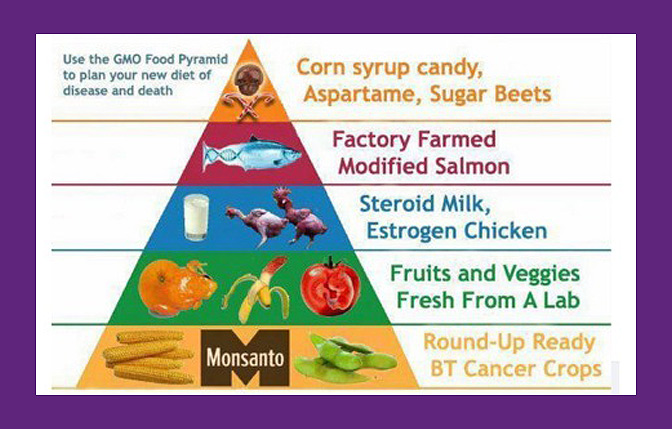
Is this corn syrup derived from GMO corn? See below for more...
The front label of Welch's Strawberry Peach product uses the phrase, "Fruity & Refreshing" in a prominent position on the label. But if this claim were accurate, it would actually say, "Corny & Refreshing" because it's made more from corn than fruit.
The front label (see picture below) also intentionally leaves out any mention of corn syrup even though high fructose corn syrup is the second most prominent ingredient of the product, right after water. It says:
Strawberry Peach flavored fruit juice cocktail blend made with apple, pear, strawberry and peach juices from concentrate.
No mention of corn.
The back label (see image below) begins with a giant, all-caps "LOVE" statement, jumping on the bandwagon of trying to associate LOVE with its product, even though no rational person would use the word "LOVE" to describe a highly refined liquid sugar that has been repeatedly linked to diabetes and obesity.
It reads:
"Our mid-priced essentials line continued to grow in FY '12 with its powerful message -- no high fructose corn syrup."
The context of this statement clearly implies that "no high fructose corn syrup" is a benefit of its essentials line of products. Yet, simultaneously, Welch's continues to promote other products that contain alarming proportions of HFCS while avoiding any mention of corn on the front label.
The first two ingredients are Filtered Water (i.e. tap water) and High Fructose Corn Syrup. An easy-to-miss bit of text admits, "Contains 20% juice," meaning 80% of the beverage is not juice.
Nowhere does the product claim to be free of GMOs. As the vast majority of high fructose corn syrup produced in North America is derived from genetically modified corn, it is very likely that the HFCS used by Welch's is actually GMO. A genetic test would not confirm this, however, as the heavy processing of HFCS destroys genetic integrity, rendering genetic ID tests useless.
Here are the photos of the label: (story continues below)

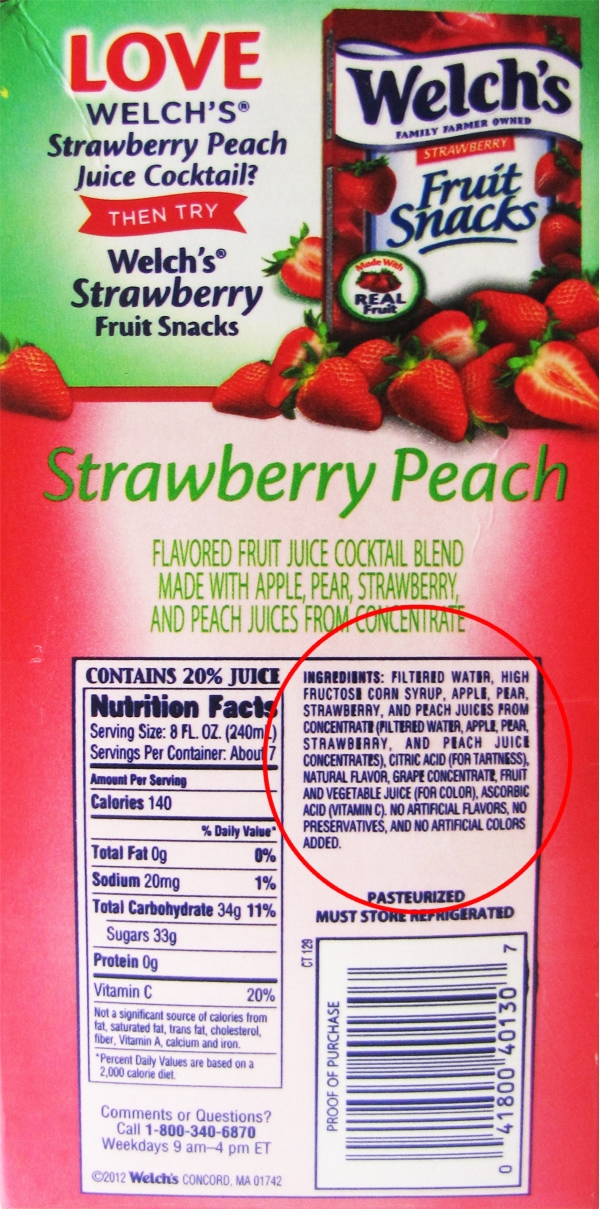
When consumers shop for fruit juices at their local grocery stores, they are easily misled by deceptive labeling practices such as those used by Welch's. Consumers use the pictures and prominent text on the front of the product as their primary cues to determine the composition of the product, and if that product label primarily depicts fruit and fruit juices, a typical consumer will incorrectly assume the product is primarily made of fruit and fruit juices. That same consumer will typically have no idea the product contains more corn derivatives than fruit juice.
Most consumers -- especially parents -- are actively trying to avoid high fructose corn syrup. This is often the reason why they choose fruit juice instead of sodas, as a matter of fact. Yet if they reach for Welch's juice cocktails, they are getting the exact same refined liquid sugar they were trying to avoid by choosing juice instead of soda!
Here at Natural News, we think Welch's should be ashamed of itself for pushing water and high fructose corn syrup as a fruit juice beverage. Its labeling practices deceive rather than inform consumers.
We urge you to call the Welch's comment line at 1-800-340-6870 and demand they stop selling high fructose corn syrup as fruit juice.
Corn is not a fruit. And corn syrup is not fruit juice. It is, however, often contaminated with mercury.
Demand that Welch's stop tricking consumers into thinking corn syrup is fruit juice.
These products are aggressively marketed with pictures of splashy fruit and loud label claims like "Fruity and Refreshing!" But what Welch's doesn't reveal anywhere except in the fine print on its ingredients label is that these juice cocktails contain more high fructose corn syrup than fruit.
In fat, they contain so much high fructose corn syrup that the front label should actually show chunks of corn rather than the fruit they currently depict.
Is this corn syrup derived from GMO corn? See below for more...
Deceptively marketed and labeled
A Natural News investigation concludes that Welch's refrigerated cocktails are deceptively labeled and marketed. The Welch's website, for starters, hides the ingredients list from consumers, showing nutrition facts but not ingredients. High fructose corn syrup only shows up under ingredients, not nutrition facts.The front label of Welch's Strawberry Peach product uses the phrase, "Fruity & Refreshing" in a prominent position on the label. But if this claim were accurate, it would actually say, "Corny & Refreshing" because it's made more from corn than fruit.
The front label (see picture below) also intentionally leaves out any mention of corn syrup even though high fructose corn syrup is the second most prominent ingredient of the product, right after water. It says:
Strawberry Peach flavored fruit juice cocktail blend made with apple, pear, strawberry and peach juices from concentrate.
No mention of corn.
The back label (see image below) begins with a giant, all-caps "LOVE" statement, jumping on the bandwagon of trying to associate LOVE with its product, even though no rational person would use the word "LOVE" to describe a highly refined liquid sugar that has been repeatedly linked to diabetes and obesity.
Welch's annual report admits it is aware that consumers seek to avoid HFCS
All this corn syrup is being pushed as fruit juice despite the fact that Welch's 2012 annual report openly admits the company is fully aware that consumers are attempting to avoid high fructose corn syrup.It reads:
"Our mid-priced essentials line continued to grow in FY '12 with its powerful message -- no high fructose corn syrup."
The context of this statement clearly implies that "no high fructose corn syrup" is a benefit of its essentials line of products. Yet, simultaneously, Welch's continues to promote other products that contain alarming proportions of HFCS while avoiding any mention of corn on the front label.
80% water and corn syrup!
Only when you get to the back label do you learn that these Welch's fruit juice cocktails -- which are heavily adorned with photos and words that describe and imply "fruit" -- are actually 80% water and corn syrup.The first two ingredients are Filtered Water (i.e. tap water) and High Fructose Corn Syrup. An easy-to-miss bit of text admits, "Contains 20% juice," meaning 80% of the beverage is not juice.
Nowhere does the product claim to be free of GMOs. As the vast majority of high fructose corn syrup produced in North America is derived from genetically modified corn, it is very likely that the HFCS used by Welch's is actually GMO. A genetic test would not confirm this, however, as the heavy processing of HFCS destroys genetic integrity, rendering genetic ID tests useless.
Here are the photos of the label: (story continues below)
Deceptive labeling pushes more high fructose corn syrup to children
Welch's fruit juice cocktails are depicted as if they were nothing but fruit juice. The photos, descriptive text and website text all imply they are made of nothing other than fruit juices. Nowhere on the product front label, website or promotional materials is corn depicted at all.When consumers shop for fruit juices at their local grocery stores, they are easily misled by deceptive labeling practices such as those used by Welch's. Consumers use the pictures and prominent text on the front of the product as their primary cues to determine the composition of the product, and if that product label primarily depicts fruit and fruit juices, a typical consumer will incorrectly assume the product is primarily made of fruit and fruit juices. That same consumer will typically have no idea the product contains more corn derivatives than fruit juice.
Most consumers -- especially parents -- are actively trying to avoid high fructose corn syrup. This is often the reason why they choose fruit juice instead of sodas, as a matter of fact. Yet if they reach for Welch's juice cocktails, they are getting the exact same refined liquid sugar they were trying to avoid by choosing juice instead of soda!
Here at Natural News, we think Welch's should be ashamed of itself for pushing water and high fructose corn syrup as a fruit juice beverage. Its labeling practices deceive rather than inform consumers.
We urge you to call the Welch's comment line at 1-800-340-6870 and demand they stop selling high fructose corn syrup as fruit juice.
Corn is not a fruit. And corn syrup is not fruit juice. It is, however, often contaminated with mercury.
Demand that Welch's stop tricking consumers into thinking corn syrup is fruit juice.
Saturday, January 12, 2013
Waking Times
Sugar and artificial sweeteners are so accessible, affordable and socially sanctioned, that few consider their habitual consumption to be a problem on the scale of say, addiction to cocaine. But if recent research is correct their addictive potential could be even worse.
Almost 40 years ago, William Duffy published a book called Sugar Blues which argued that refined sugar is an addictive drug and profoundly damaging to health. While over 1.6 million copies have been printed since its release in 1975, a common criticism of the book has been that it lacked sufficient scientific support.
Today, William Duffy’s work is finding increasing support in the first-hand, peer-reviewed and published scientific literature itself. Not only is sugar drug-like in effect, but it may be more addictive than cocaine. Worse, many sugar-free synthetic sweeteners carry with them addictive properties and toxicities that are equal to, or may outweigh those of sugar.
Back in 2007, a revealing study titled, “Intense sweetness surpasses cocaine reward,” found that when rats were given the option of choosing between water sweetened with saccharin and intravenous cocaine, the large majority of animals (94%) preferred the sweet taste of saccharin.[i]
This preference for sweetness was not attributable to its unnatural ability to induce sweetness without calories, because the same preference was found with sucrose; nor was the preference for saccharin overcome by increasing doses of cocaine.
A common argument against the relevance of animal studies like this to human behavior is that rats differ too profoundly from humans. However, even insects like forager bees have been found to respond in a similar way to humans when given cocaine, experiencing an overestimation of the value of the floral resources they collected, with cessation of chronic cocaine treatment causing a withdrawal-like response.[ii]
Researchers believe that intense sweetness activates ancient neuroendocrine pathways within the human body, making obsessive consumption and/or craving inevitable. The authors of the cocaine/saccharin study summarized this connection as follows:
Our findings clearly demonstrate that intense sweetness can surpass cocaine reward, even in drug-sensitized and -addicted individuals. We speculate that the addictive potential of intense sweetness results from an inborn hypersensitivity to sweet tastants. In most mammals, including rats and humans, sweet receptors evolved in ancestral environments poor in sugars and are thus not adapted to high concentrations of sweet tastants.
The supranormal stimulation of these receptors by sugar-rich diets, such as those now widely available in modern societies, would generate a supranormal reward signal in the brain, with the potential to override self-control mechanisms and thus to lead to addiction.In a previous article, “Is Fructose As Addictive As Alcohol?”, we looked at the addictive properties of isolated fructose in greater depth, including over 70 adverse health effects associated with fructose consumption.
It appears that not only does fructose activate a dopamine- and opioid-mediated hedonic pathway within the body, but like excessive alcohol consumption, exacts a significant toll on health in exchange for the pleasure it generates.
The drug-like properties of common beverages and foods, have been the subject of a good deal of research over the past few decades. Wheat and related grains, for instance, are a major foodsource of opioid peptides. These pharmacologically active compounds, also found in milk,coffee and even lettuce, may even explain why ancient hunters and gatherers took the agrarian leap over 10,000 years ago.
Likely, the transition from the Paleolithic to Neolithic was motivated by a combination of environmental pressures and the inherently addictive properties made accessible and abundant due to the agrarian/animal husbandry mode of civilization. For more on this, read our essay “The Dark Side of Wheat.”
As far as synthetic sweeteners, an accumulating body of toxicological research indicates they have a wide range of unintended, adverse health effects beyond the aforementioned problem of addiction. For a comprehensive list, view our Artificial Sweetener Research page.
One clear implication of these findings is that one is best served consuming natural sweet foods, including honey, or fruit like apples. Not only are these easier to consume in moderation, but they have a profound set of “side benefits” as well.
Tuesday, September 25, 2012
Fat In America Part 2
<iframe width="440" height="260" src="http://www.youtube.com/embed/yFg3WDXaxN4?feature=player_detailpage" frameborder="0" allowfullscreen></iframe>
Monday, September 24, 2012
10% American Teens Suffering From Liver Disease
Written by:
Heidi Stevenson
In a shocking report that bodes ill for the future health of the generation now entering adulthood, ten percent of today's teens in the United States suffers from nonalcoholic fatty liver disease (NAFLD).
Data from the National Health and Nutrition Examination Survey (NHANES) was examined by Marilyn Vos of Emery University. NHANES recorded data on 10,359 teenagers aged 12-18 from 1988-2008. Vos and co-researchers found that 9.9% have NAFLD.
Even more ominously, Vos stated that NAFLD "seems to be increasing faster than the prevalence of obesity." Previously, the disease has been very closely associated with obesity. Now, though, it's clear that there's more than excess weight driving the increase in liver disease.
High fructose corn syrup (HFCS) is known to be associated with nonalcoholic fatty liver disease. Now that we're seeing this once-rare disorder affecting one in ten teenagers, one must wonder how health agencies like the FDA can continue to ignore the devastation resulting from out-of-control Agribusiness, which is clearly profiting from the devastation of the people's health.
Instead, though, Dr. Vos is advocating the creation of community and school programs to promote healthy food, exercise, and weight loss. This is not addressing the root cause. It is, in fact, effectively blaming the victims for their poor health.
Difficulty Avoiding Fructose
The fact is that it's becoming more and more difficult to obtain a healthy diet. Our society is now designed around the dictates of Agribusiness. Go into any supermarket and you will see aisle after aisle of prepared foods. If you read package ingredients, it's horrifying to see that most of it contains massive amounts of sugar, fructose, and artificial sweeteners—not to mention all the other toxic ingredients.Too many of today's harassed and stressed parents often find it difficult, both in terms of finances and time, to provide decent diets for their children. Even those who manage to find the time and money to provide good food often don't know what it is, since they've never seen it themselves and the agencies that should be providing information often produce lies. The FDA classifies fructose as GRAS—generally recognized as safe.
As a result, HFCS and other forms of fructose are found in nearly every type of product on supermarket shelves, including ones that aren't supposed to be sweet. It's replacing sugar in candies and soft drinks, so children in particular are at risk. Avoiding it means avoiding nearly all prepared foods, including ones intended to aid in home cooking, like bottled sauces sauces.
Fructose Metablism
Fructose is not metabolized in the same way that glucose (regular sugar) is, so treating it as equivalent is absurd:- Fructose is metabolized completely by the liver, but only 20% of glucose metabolism is by the liver. This adds to the load that the liver must carry.
- Fructose results in storing three times more fat than glucose, thus fueling the obesity epidemic.
- Fructose is probably the culprit behind a serious increase in gout because its metabolism creates uric acid.
Fructose Damage
NAFLD affects the liver's ability to perform many critical functions, including regulation of blood glucose and cholesterol, fat burning, metabolism of hormones, vitamin A storage, and elimination of toxins, which is of course, becoming a more and more critical function in this increasingly polluted world.Fatty liver disease leads to diabetes, hepatitis, cirrhosis, and cancer. It also means that overall health of the entire body is harmed, so that the victim's enjoyment of life is proscribed.
Nonetheless, there is no attempt to address the cause, Agribusiness that's run so rampant it can control nearly all aspects of our access to food. Instead, researchers who clearly document how rampant NAFLD is—to the point that one-tenth of teens are now sick with it—prefer to focus on the creation of ever-more government programs that will drain ever-more money from the populace and won't do a bit of good.
Saturday, August 11, 2012
How Corn Syrup Made Americans FAT
 |
| Dees Illustration |

High-fructose corn syrup, an extremely cheap, processed, and easily produced alternative to sugar, has been deemed ‘safe’ by the Food and Drug Administration since 1976. For decades, corn has been converted into high-fructose corn syrup for companies to use in their products at an extremely low cost, but it wasn’t so long ago that the dangers of this sugar alternative and food preservative have been recognized. Below you can view an infographic outlining the many dangers of high-fructose corn syrup, and how the production of corn syrup in general has made America FAT.
Presence of Corn and How There is So Much of It
Not many individuals would be surprised to hear that corn is the most widely planted cereal crop, with nearly 163 million hectares of land area being used for cultivation. Think the state of New York doubled in size for dedication to corn. And what do these corn fields output? 316 million metric tons were produced between 2011 and 2012 – nearly 6x that of wheat and 20x that of cotton.
Frighteningly, much of this corn isn’t even made to eat, as it actually isn’t edible.
The commodity is often produced with government backing for one primary reason – to be processed. The corn is simply a raw material meant to be transformed into the harmful ingredients we’ve come to consume so often today. It requires 3.2 pounds of corn to create 1 pound of high-fructose corns syrup. So it isn’t surprising that 25 million metric tons, about 8.2%, of corn was turned into HFCS between 2011-12, yielding 8 million metric tons of HFCS.
How is corn being produced at such alarming rates? Farmers aren’t alone when it comes to producing crops like corn, wheat, and soybeans – the government plays a large role. Between 1995 and 2010, the government put out $77.1 billion in subsidies for corn to be planted and grown. With corn being only 1 of the top 9 foods the government is paying for you to eat, 20 different subsidies are offered to farmers who grow corn, including:
- Direct Payments and Production Contracts
- Crop Insurance Premium Subsidies
- Price Support Payments (loan deficiency, marketing loan gains, and certificates)
- Counter-Cyclical Programs
- More on Corn in the Form of High-Fructose Corn Syrup
And the prevalence of high-fructose corn syrup in food seems tied to its production rate. In fact, the ingredient is so prevalent that the average American eats approximately 35 pounds of HFCS annually. While the American Heart Association recommends a maximum of 6 teaspoons of table sugar a day for a woman and 9 teaspoons for a man, the average American consumes 22 teaspoons of sugar a day – 10.4 teaspoons being comprised of HFCS. To put it in other words, 47 grams of HFCS are taken in each day on average. HFCS is commonly in:
- Processed Foods, ketchup, candy, cereal
- Canned fruits and vegetables
- Breads
- Soft Drinks
- Juices
- Beers
- Sweet-coating on pharmaceuticals
- Preserved Meats
GMO foods have been shown to cause harm to animal and human health in numerous ways, with Monsanto’s Bt corn causing weight gain and organic disruption, as a single example.
GM corn requires more pesticides and herbicide use, especially that of Monsanto’s best selling herbicide Roundup. Pesticides and herbicides create resistant crops (calling for even more use,) have been tied to birth defects, and could be making you fat, among other things.
Insecticides modified in GM corn also pollute U.S. waters.
Corn requires more nitrogen fertilizer than any other crop, which creates dead zones – areas in water where virtually nothing can live due to lack of oxygen.
You can support this information by voting on Reddit HERE

Tuesday, June 12, 2012
Why Your Food Is Making You FAT
obesityus23
Up a rickety staircase at the Newarke Houses Museum in Leicester, England hangs a portrait of Britain’s first obese man, painted in 1806. Daniel Lambert weighed 53st (335kg) and was considered a medical oddity.
Too heavy to work, Lambert came up with an ingenious idea: he would charge people a shilling to see him. Lambert made a fortune, and his portrait shows him at the end of his life: affluent and respected – a celebrated son of Leicester.
Two hundred years on, I’m in a bariatric ambulance (an alternative term for obese, favoured by the medical world because it’s less shaming to patients) investigating why the UK is in the midst of an obesity crisis.
The crew pick up a dozen Daniel Lamberts every week.
Fifty-three stone is nothing special, it’s at the lower end of the weight spectrum, with only the 80st patients worthy of mention when a shift finishes. The specially designed ambulance carries an array of bariatric gizmos including a “spatula” to help with people who have fallen out of bed or, on a recent occasion, an obese man jammed between the two walls in his hallway. As well as the ambulance, there’s a convoy of support vehicles including a winch to lift patients onto a reinforced stretcher. In extreme cases, the cost of removing a patient to hospital can be up to £100,000, as seen in the recent case of 63st teenager Georgia Davis.
But these people are not where the heartland of the obesity crisis lies. On average, in the UK, we are all – every man, woman and child – three stone heavier than we were in the mid-60s. We haven’t noticed it happening, but this glacial shift has been mapped by bigger car seats, swimming cubicles, XL trousers dropped to L (L dropped to M). An elasticated nation with an ever-expanding sense of normality.
Why are we so fat? We have not become greedier as a race. We are not, contrary to popular wisdom, less active – a 12-year study, which began in 2000 at Plymouth hospital, measured children’s physical activity and found it the same as 50 years ago. But something has changed: and that something is very simple. It’s the food we eat. More specifically, the sheer amount of sugar in that food, sugar we’re often unaware of.
The story begins in 1971.
Richard Nixon was facing re-election. The Vietnam war was threatening his popularity at home, but just as big an issue with voters was the soaring cost of food. If Nixon was to survive, he needed food prices to go down, and that required getting a very powerful lobby on board – the farmers. Nixon appointed Earl Butz, an academic from the farming heartland of Indiana, to broker a compromise. Butz, an agriculture expert, had a radical plan that would transform the food we eat, and in doing so, the shape of the human race.
Butz pushed farmers into a new, industrial scale of production, and into farming one crop in particular: corn. US cattle were fattened by the immense increases in corn production. Burgers became bigger. Fries, fried in corn oil, became fattier.
Corn became the engine for the massive surge in the quantities of cheaper food being supplied to American supermarkets: everything from cereals, to biscuits and flour found new uses for corn. As a result of Butz’s free-market reforms, American farmers, almost overnight, went from parochial small-holders to multimillionaire businessmen with a global market. One Indiana farmer believes that America could have won the cold war by simply starving the Russians of corn. But instead they chose to make money.
By the mid-70s, there was a surplus of corn. Butz flew to Japan to look into a scientific innovation that would change everything: the mass development of high fructose corn syrup (HFCS), or glucose-fructose syrup as it’s often referred to in the UK, a highly sweet, gloppy syrup, produced from surplus corn, that was also incredibly cheap.
HFCS had been discovered in the 50s, but it was only in the 70s that a process had been found to harness it for mass production. HFCS was soon pumped into every conceivable food: pizzas, coleslaw, meat. It provided that “just baked” sheen on bread and cakes, made everything sweeter, and extended shelf life from days to years.
A silent revolution of the amount of sugar that was going into our bodies was taking place. In Britain, the food on our plates became pure science – each processed milligram tweaked and sweetened for maximum palatability. And the general public were clueless that these changes were taking place.
There was one product in particular that it had a dramatic effect on – soft drinks. Hank Cardello, the former head of marketing at Coca-Cola, tells me that in 1984, Coke in the US swapped from sugar to HFCS (In the UK, it continued to use sugar). As a market leader, Coke’s decision sent a message of endorsement to the rest of the industry, which quickly followed suit.
There was “no downside” to HFCS, Cardello says. It was two-thirds the price of sugar, and even the risk of messing with the taste was a risk worth taking when you looked at the margin, especially as there were no apparent health risks. At that time, “obesity wasn’t even on the radar” says Cardello
Thursday, May 17, 2012
UCLA Proves HFCS Makes You Fat & Stupid
The laughable habit of ordering a huge fast-food meal and washing it down with a diet soda might actually be smarter than it sounds, if the results of a new study published Tuesday are any indication.
The nutrition industry's favorite bogeyman, high-fructose corn syrup, took yet another massive hit when a UCLA study in the Journal of Physiology showed the ubiquitous additive makes lab rats less clever.
The study addressed the interaction of omega-3 fatty acids and high fructose intake. It found that rats fed a diet deficient in omega-3s had difficulty navigating a maze they'd already been trained to find their way through, and that a steady diet of HFCS as their drinking water only made their difficulties worse. On the other hand, the rats fed both HFCS and omega-3s did better all around than did the sugar-only group.
The researchers were less surprised to find that HFCS also gave the rats metabolic syndrome and insulin resistance, often precursors to diabetes, obesity, or both.
The study results were limited to the effects of HFCS, not sugar derived from beets or cane or fructose from fruit.
"Our findings illustrate that what you eat affects how you think," UCLA professor Fernando Gomez-Pinilla, one of the co-authors of the study, said in a press release. "Eating a high-fructose diet over the long term alters your brain's ability to learn and remember information. But adding omega-3 fatty acids to your meals can help minimize the damage."
This is foul news, not only for the legions of people who insist on drinking regular Coke (KO) and Pepsi (PEP), but for the Corn Refiners Association. The six-member group, which includes Archer Daniels Midland (ADM) and Tate & Lyle Americas (TATYY.PK), has been fighting a losing battle trying to rehab HFCS' image. Despite any real evidence to support the idea, it's now a given that sugar is somehow better for you than HFCS.
Seeing the writing on the wall, ConAgra (CAG), Starbucks (SBUX), and Kraft (KFT) have removed the offending ingredient from some or all of their products, the Wall Street Journal notes. That list of sinking ship deserters is only likely to get longer as more studies are undertaken.
The corn refiners have even tried to lobby the Food and Drug Administration to change the blackened name of its product from "high-fructose corn syrup" to "corn sugar," an effort unlikely to bear fruit anytime soon.
Saturday, April 28, 2012
HFCS Causes Obesity
High-fructose corn syrup is just one food ingredient, among many others, that virtually every health advocate will tell you to avoid. The Corn Refiners Association (CRA), a large organization that represents the corn refining industry, continues to assert that high-fructose corn syrup is completely safe and perfectly ‘natural’, but many health experts and research results couldn’t disagree more.
One contribution high-fructose corn syrup is making to our society is a startling increase in obesity rates. Scientists have repeatedly proven that heavily altered (and often genetically modified) form of fructose, used in thousands of food products and soft drinks, can negatively impact human metabolism and is contributing to the growing obesity epidemic.
High-Fructose Corn Syrup Alters Human Metabolism
For quite some time, high-fructose corn syrup was thought to be perfectly healthy by some individuals, and the ingredient rampantly consumed in high amounts internationally. But research shows that high-fructose corn syrup changes human metabolism, and is actually metabolized much differently than other sugars.
HFCS is a highly processed product that contains nearly the same amount of fructose and glucose. Sucrose, however, is a larger sugar molecule that is metabolized into glucose and fructose in your intestine. High-fructose corn syrup metabolizes to fat in your body much faster than other sugars, resulting in increased fat gain. Since the fructose is consumed in liquid form, the negative effects on human metabolism are even greater.
Monday, March 26, 2012
Big Sugar Takes On Big Corn
In what has all the appearances of the pot calling the kettle black, two of the unhealthiest and most widely consumed items in the American diet are headed to court to decide which one is more evil. Big Sugar is taking on Big Corn and their High Fructose Corn Syrup (HFCS) in a landmark battle scheduled to go before a Los Angeles federal judge this week.
Sugar producers are accusing their corn industry rivals of false advertising by casting HFCS as "nutritionally the same as table sugar" and claiming that "your body can't tell the difference." The sugar group contends that HFCS is far less healthy than table sugar and is demanding that the Corn Refiners Association ads be halted as well as demanding payment of unspecified monetary damages.
Medical research on the metabolic effects of consuming sugar versus high fructose corn syrup has consistently indicated heightened risks from the liquid sweetener, said Michael I. Goran, director of the Child Obesity Research Center at USC's Keck School of Medicine.
"There's definitely a difference in metabolic fate and outcome of fructose ingestion relative to glucose," Goran said, noting that HFCS contains more fructose, as its name implies. "So the more you tip the scale toward fructose, the more those negative effects kick in."
A battle between unhealthy giants to see which is worse
High fructose corn syrup was invented in 1957. It took another 20 years to develop a low-cost production method for HFCS. After tariffs that drove up the cost of imported cane and beet sugars, and federal subsidies that drove down the cost of corn, HFCS usage quickly exploded. In 1972, the average American consumed about 1.2 pounds of the HFCS. By 1999, average consumption had ballooned to over 63 pounds.
The reason that food makers have flocked to HFCS in recent decades is because it is cheaper to make, helps stabilize foods, allows for better browning of baked goods and provides a more concentrated sweetness than the same amount of sugar.
In the last ten years, HFCS usage has plummeted by more than 20% as consumers have grown increasingly wary of the sweetener which has been blamed for America's large and expanding obesity epidemic and a wide array of other health problems, including liver damage, diabetes, heart problems and even mercury consumption.
About a decade ago, the surgeon general first expressed alarm over the rapid and ubiquitous spread of the sweetener in processed foods and concerns about HFCS have mounted ever since.
Because of its tarnished image the association representing corn growers, processors and distributors has applied to the U.S. Food and Drug Administration to officially change the name of HFCS to "corn sugar", a move vehemently opposed by the sugar industry.
It isn't just Big Sugar, however, that opposes high fructose corn syrup's efforts to rebrand itself.
"If sugar wanted to change its name to 'highly nutritious vitamins' we would oppose that too," said James S. Turner, a Washington attorney who heads pro-sugar's Citizens for Health.
Both sugar and HFCS rake in hundreds of billions of dollars per year. Though HFCS is considered the unhealthier of the two, table sugar is also horribly unhealthy. The World Health Organization has labeled refined sugar as a leading cause of illness in the world today. Both should be avoided.
According to the USDA, the average American consumed 888 calories per day from sweeteners with an average consumption of 35 pounds of high fructose corn syrup and 47 pounds of sugar per person in 2010 - more than triple the per-capita sweetener intake elsewhere in the world.
HFCS Soon To Be Corn Sugar- Still Deadly No Matter What They Call It
In the face of mounting consumer concerns about the dangers of high fructose corn syrup (HFCS) and defecting food company clients, the Corn Refiners Association has come up with a solution: Instead of trying to give consumers a healthier product, they have petitioned the FDA to let them give HFCS a new name: "corn sugar".
The industry would have us believe that the name change is for our own good to clear up “confusion" about HFCS. However, the question is whether this move is much more about marketing, hiding health dangers and keeping profits high than it is about any concern for consumers.
According to Audrae Erickson, president of the Washington-based Corn Refiners Association: "Clearly the name is confusing consumers. Research shows that 'corn sugar' better communicates the amount of calories, the level of fructose and the sweetness in this ingredient."
On the other hand, increasing numbers of studies are warning about the dangers of HFCS and consumers are becoming increasingly concerned about those dangers. According to one noted market research group, about 58 percent of Americans say they are concerned that high-fructose corn syrup poses risks to their health. As a result of such concerns, many food companies are discontinuing the use of HFCS in their products, including Hunt's Ketchup, Ocean Spray Cranberry Juice, Snapple and Wheat Thins crackers.
High fructose corn syrup is not naturally made and contains different metabolic structures of fructose, dextrose and sucrose. Our bodies systems metabolize these very differently than natural forms. HFCS has been strongly linked to the epidemics of obesity and diabetes and the huge consequences of those epidemics on the health of tens of millions of Americans. In addition, excess fructose intake has been associated with adverse health effects such as:
Metabolic syndrome, elevated triglyceride levels, hypertension, high blood pressure, non-alcoholic fatty liver disease, excess uric acid levels (associated with gout), and elevated levels of advanced glycation end products (linked with aging and diabetes complications).
In May, Princeton researchers announced the results of two studies on HFCS. In the first study, male rats given water sweetened with high-fructose corn syrup in addition to a standard diet of rat chow gained much more weight than male rats that received water sweetened with table sugar, or sucrose.
In the second study, rats on a diet rich in HFCS showed characteristic signs of metabolic syndrome, a dangerous condition in humans. In addition to significant increases in circulating triglycerides and other problems, the rats also ballooned in size. Male rats gained 48 percent more than rats eating a normal diet - the equivalent to a 200-pound man gaining 96 pounds.
Although food label changes aren't common, the FDA has allowed name changes in the past. The ingredient first called "low erucic acid rapeseed oil" was changed to the more pleasant sounding "canola oil" in the 1980s. More recently, the FDA allowed prunes to be called "dried plums."
Notably, and perhaps ominously, the FDA also permitted the use of different names for unhealthy monosodium glutamate (MSG), which now comes hidden in multitudes of food products with over 25 different names, including "natural flavoring" and "hydrolyzed vegetable protein".
Food manufacturers originally flocked to the use of HFCS because it is cheaper than sucrose (table sugar) and mixes well with a variety of products. Should the FDA approve the name change to "corn sugar", it is likely that food manufacturers will continue to use the dangerous sweetener in their products and perhaps return to it in products where it has been discontinued. But isn't that what the name change is really all about anyway?
Americans Catching On & Rejecting Sodas
Better late than never, but more Americans finally seem to be getting the message they've been consuming far too much soda and as such, sales of pop have been falling.
In reality, soda sales have been falling for about seven years, but they really dropped off in 2011 as consumers made other choices about what sort of refreshments to put in their bodies.
The beverage market actually grew last year by about 0.9 percent, but according to sales data, consumers chose more coffee and teas, sports and energy drinks and bottled water over soda and fruit juices.
Beverage Marketing, a research, consulting and financial-services firm that tracks the beverage industry, said 2011 was the second year of growth for the beverage industry after two consecutive declines in 2008 and 2009.
Costs are up, sure, but choices are healthier
One of the reasons why sales were down, according to Beverage Digest, an industry newsletter, is cost: Prices for carbonated soft drinks climbed about 3 percent last year, making them harder to afford. Drink makers passed on higher prices for the cost of sweeteners, such as corn syrup and other raw materials, to consumers.
According to an analysis of sales data by Beverage Digest, all three big soda-makers -- Coca-Cola, PepsiCo and Dr. Pepper Snapple -- showed slower sales of popular brands like Coke, Diet Coke, Pepsi-Cola, and Mountain Dew.
Coke and Pepsi market shares shrank while Dr. Pepper's share was mostly flat. And though sales of some soda brands rose, sales of Dasani -- a bottled water sold by Coca-Cola -- was the fastest-growing beverage brand, rising 11 percent, according to Beverage Digest. It was followed by Arizona iced tea (9.3 percent) and Pepsi's Gatorade (8 percent).
Carbonated drinks, by comparison, grew about 3 percent a year through the 1990s, but sales have been declining steadily since 2005, as more health-conscious consumers increasingly turn to better choices of drink.
Sales of Gatorade, meanwhile, are ballooning as well, topping the one billon-gallon mark last year for the first time. In fact, Beverage Marketing says Gatorade, coupled with G2 and other brand variations, is the fifth-largest beverage trademark.
Niche drinks and water sales increasing
According to Beverage Marketing, other niche drinks are making headway.
"As the proliferation of 'beverages with benefits' continues with the introduction of a variety of drinks marketed as delivering specific functional results," Beverage Marketing has begun to focus "on a niche within a niche: relaxation beverages," says the summary of a new report by the analytical firm, which calls such beverages an "emerging sub-segment of the wellness and functional beverage marketplace."
But clearly growth in sales of bottled water continues unabated, according to industry figures. In 2008 and 2009, the poor economy led to a decline in sales but they rebounded again in 2010, as growth really accelerated last year. Bottled water sales volume was up 4.1 percent in 2011, faster than the 3.5 percent growth in 2010.
"The strong showing by high-end and functional products shows that consumers -- at least the more affluent ones -- are not concerned exclusively with economic consideration when making their beverage selections," Michael C. Bellas, chairman and CEO of Beverage Marketing, said.
The ill-health effects of drinking sugar-laden soda are well-known. Soda consumption is a major cause of obesity, which can lead to a range of health problems including heart disease, stroke and, of course, diabetes.
In fact, recent research has found that just drinking one soda per day increases heart risk in men, even if it is not contributing to overall weight gain.
"Continually subjecting our bodies to high amounts of glucose, to high blood sugar levels that trigger large secretions of insulin results in stresses that in the long run show up as high risk of heart disease and diabetes," the study's co-author, Dr. Walter Willett, told CBS News.
Tuesday, December 20, 2011
Highly Toxic Mercury In Processed Foods
Why has the FDA ignored the fact that mercury, an element that is highly toxic in all forms, was found in a large number of brand-name processed foods?
Specifically, the mercury content was found to be contained in high-fructose corn syrup, which also reportedly contains genetically modified ingredients.
Instead of addressing this major public health concern, the FDA is focusing their time on crushing beneficial supplements through ridiculous NDI regulations that threaten the entire infrastructure of the nutraceuticals industry.'
Wednesday, August 31, 2011
Hidden Sources Of HFCS
It is amazing how ubiquitous high fructose corn syrup (HFCS) has become. Most of the products that you purchase from the grocery store contain HFCS, including the ones you would least expect.
It has the same sweetness and taste as an equal amount of sucrose from cane or beet sugars, so most people can't tell the difference. And since it tastes good they continue to eat it anyway, oblivious to what they are eating and the impact it may have on them, and the planet.
In spite of it being much more complicated to produce, HFCS is actually cheaper to make than regular sugar from beets or sugar canes. It's also very easy to transport, meaning lower costs and higher profits for food producers. That being said, there is a con to mass producing this cheap sugar.
Wednesday, March 16, 2011
Watch Soda Effect Your Body
In this video, reporter Yunji DeNies drinks a 20-ounce glass of cola, which contains the equivalent of 16 teaspoons of sugar in the form of high fructose corn syrup (HFCS). This is nearly three times the maximum daily sugar intake recommended by the American Heart Association.
HFCS typically contains a mixture of 45 percent glucose and 55 percent fructose (although recent investigations have found that many brand-name sodas actually contain 65 percent fructose!).
Once ingested, your pancreas rapidly begins to create insulin in response to the sugar. The rise in blood sugar is quite rapid. Here’s a play-by-play of what happens in your body upon drinking a can of soda:
* Within 20 minutes, your blood sugar spikes, and your liver responds to the resulting insulin burst by turning massive amounts of sugar into fat.
* Within 40 minutes, caffeine absorption is complete; your pupils dilate, your blood pressure rises, and your liver dumps more sugar into your bloodstream. As you could see in the report above, DeNies’ blood glucose level was 79 at the outset of the experiment, and after 40 minutes it had risen to 111!
* Around 45 minutes, your body increases dopamine production, which stimulates the pleasure centers of your brain – a physically identical response to that of heroin, by the way.
* After 60 minutes, you’ll start to have a blood sugar crash, and you may be tempted to reach for another sweet snack or beverage.
Subscribe to:
Posts (Atom)